The Jobs Behind the Tour de France: A Look Behind the Scenes at the Technical and Unusual Aspects of the Tour de France.
Published on : July 16, 2025

⚡ APPRENTICESHIP TAX • Why and how to pay your tax to éklore! Info > CLICK HERE
Published on: July 16, 2025
Read more
Published on : July 16, 2025
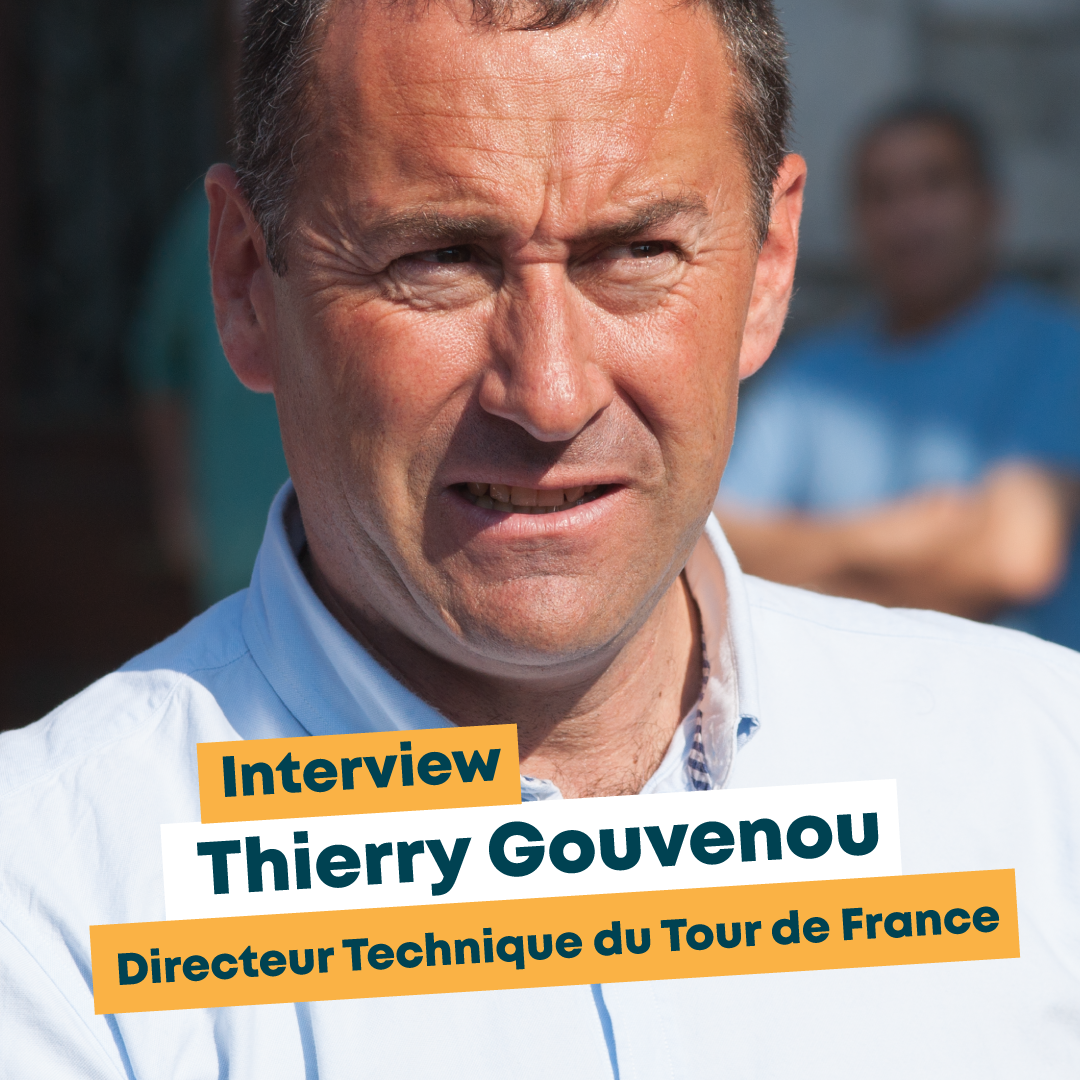
A professional cyclist in the 1990s and a passionate advocate of sports management, Thierry has successfully turned his passion into a career. A graduate of éklore-ed (formerly CNPC Sport), he has built a diverse career spanning performance, mentorship, and strategy. From managing sports organizations to supporting innovative projects in the sports world, his perspective is both seasoned and forward-looking. He is currently the Technical Director of the Tour de France at ASO, and he joins us to discuss the design of the world-famous Tour de France route.
Planning a stage of the Tour de France involves striking a delicate balance between regulatory requirements, safety, entertainment, and logistics. It all starts with the rules of the International Cycling Union (UCI), which impose strict limits, particularly on maximum permitted distances. Next, rider safety is paramount: certain roads are ruled out if their surface or width does not allow for the peloton to pass safely.
Beyond the technical aspects, Thierry Gouvenou emphasizes the importance of welcoming the public. A route may look magnificent on paper, but if it is inaccessible or poorly visible to spectators, it has no place in the Tour. The other priority is to create a race narrative, with stages that generate interest and suspense, both for the spectators along the route and for television viewers, who remain the core audience.
The initial route is mapped out in the office using digital tools like Google Maps or specialized software, but nothing can replace a site visit. It is on-site that decisions are finalized, adjusted, or scrapped. Thierry Gouvenou also notes that he does not consult with municipalities to determine the route, although specific requests may sometimes be taken into account. It is Christian Prudhomme, the Tour director, who selects the stage towns; Thierry Gouvenou, for his part, connects the points while ensuring sporting, technical, and safety coherence.
Finally, whenever possible, a cultural touch is added to the route: monuments, iconic landscapes, picturesque villages… It’s a way to captivate the millions of viewers around the world who watch the Tour as much for the scenery as for the competition.
The main technical challenge today is rider safety. Two major trends are complicating matters: on the one hand, roads are increasingly designed to slow down cars—with speed bumps, chicanes, narrowings, and traffic islands—and on the other, bicycles are becoming ever more advanced, making the peloton faster and more compact.
This combination of increasing speeds and urban obstacles poses a major risk: falls. Thierry Gouvenou points to an alarming rise in accidents, to the point where professional cycling itself could be threatened if nothing is done.
There are, of course, areas where security measures are specifically stepped up, particularly at mass sprints. In those areas, any obstacles are removed to prevent even the slightest incident. But applying this across the Tour’s entire 3,500 km route would be financially impossible. The cost of removing a single traffic island can run into the thousands of euros.
Technological advances have a significant impact on how race stages are designed. Today’s bicycles allow riders to go much faster, which forces organizers to rethink certain sections of the course, particularly with regard to safety. As the peloton speeds up, greater foresight is required when it comes to hazardous areas.
On the environmental front, although this point was not discussed in detail during the discussion, Thierry Gouvenou repeatedly emphasized the desire to adapt the Tour to contemporary realities, particularly by highlighting the regions it passes through. In this regard, the selection of landscapes, historic towns, or areas with strong tourist appeal can also serve to raise awareness about the preservation of natural and cultural heritage.
Featured image for this article by Ludovic Péron — Own work, CC BY-SA 3.0, https://commons.wikimedia.org/w/index.php?curid=33373268