Sports, Data & Performance: Join us on May 20 at éklore
Published on : May 5, 2026

⚡ OPEN CAMPUS • Come check out Éklore School!Every Wednesday > CLICK HERE
Published on: November 6, 2025
Read more

Published on : May 5, 2026
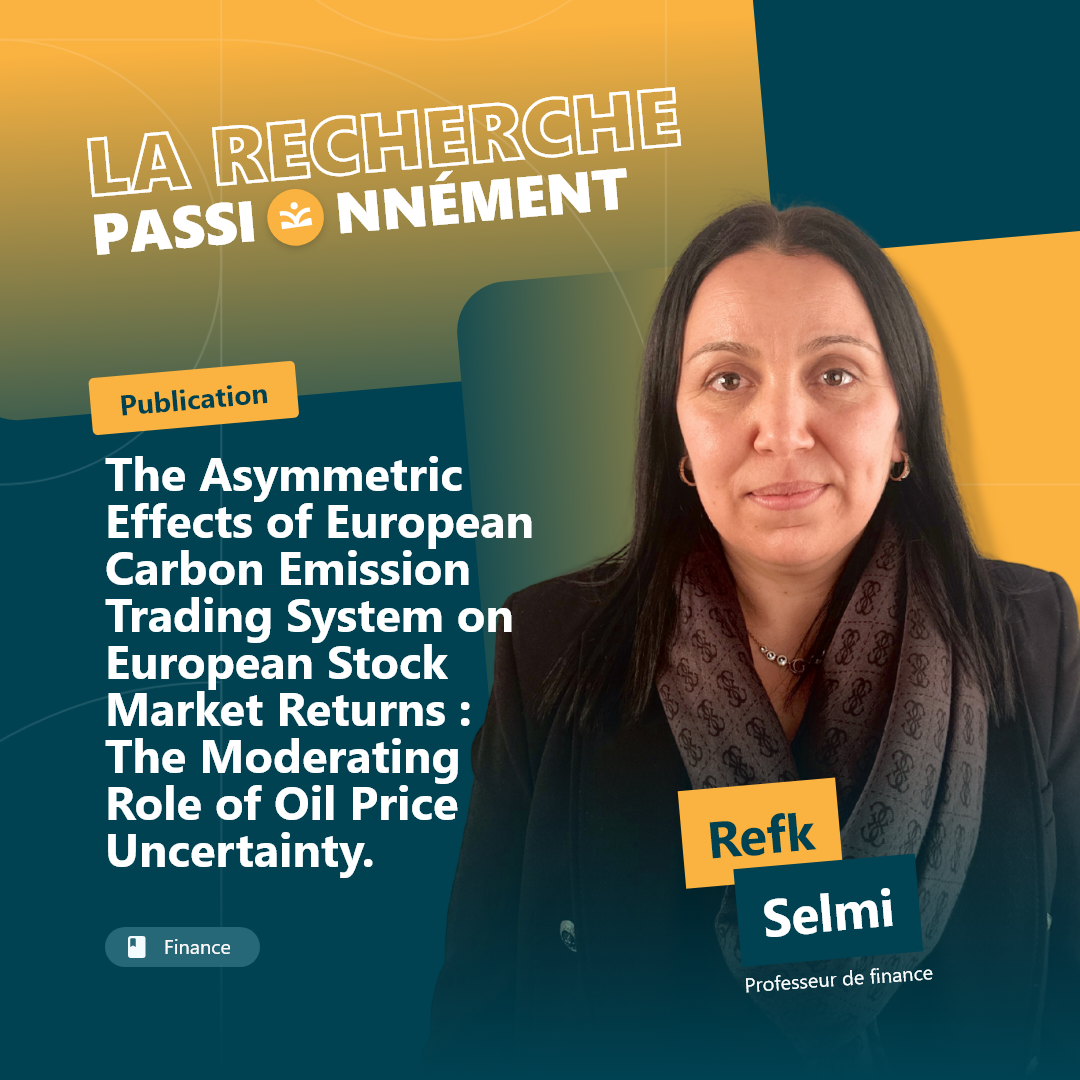
The Asymmetric Effects of the European Union Emissions Trading System on European Stock Market Returns: The Moderating Role of Oil Price Uncertainty
Published in: International Review of Financial Analysis
This article examines how short- and long-term changes in the European Union’s carbon market and oil price uncertainty affect the performance of European stock markets. The aim is to understand the effects of these factors under different market conditions and across different countries.
The results reveal that the relationships are complex and asymmetric: when the price of carbon allowances rises, certain European economies (Belgium, Spain, and Denmark) are negatively affected in the long term, while others (Germany, France, Finland, Italy, Ireland, and the Netherlands) may benefit. In the short term, the carbon market tends to boost stock prices across all European economies. The study also shows that oil price uncertainty does not act uniformly: it can amplify or mitigate the link between the carbon market and stock markets. This serves as a reminder that energy dependence remains a central issue for investors and economic policymakers.
This research is fully aligned with our school’s “Business Impact and Development” focus area, which aims to understand the environmental impacts of economic activities and to support companies’ transition toward sustainable and responsible business models. It also helps address the development challenges facing our region, where businesses must incorporate climate and energy risks into their decision-making to build a more resilient economy that aligns with the Sustainable Development Goals (SDGs).
By linking global trends in energy markets and carbon quotas to local realities, this study offers concrete strategies to support a low-carbon transition that serves the common good.