The Jobs Behind the Tour de France: A Look Behind the Scenes at the Technical and Unusual Aspects of the Tour de France.
Published on : July 16, 2025

⚡ APPRENTICESHIP TAX • Why and how to pay your tax to éklore! Info > CLICK HERE
Published on: July 16, 2025
Read more
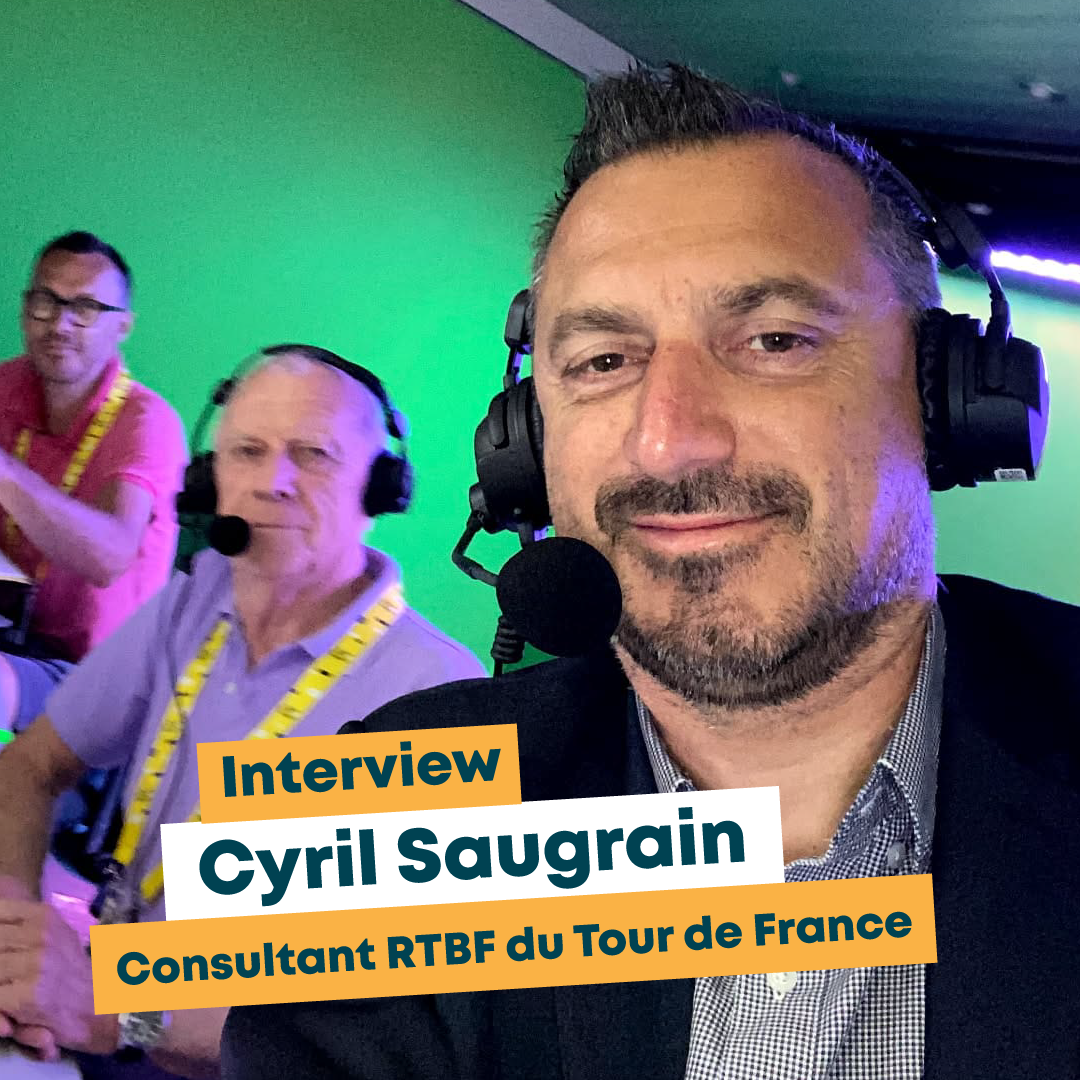
Published on : July 16, 2025
“I started cycling as a junior, under an FSGT license, before switching to the FFC when I joined the Coulommiers sports academy,” recalls Cyril. “My father and I chose CM Aubervilliers, a major club in Seine-Saint-Denis. I stayed there my entire career until I turned pro.”
Such loyalty is rare in a sport that is constantly changing. It led him to the professional team nicknamed “the boys from Aubervilliers,” at a time when French cycling had few professional teams. “We were determined to help new teams emerge. In 1996, I lined up at the start of the Tour with a clear goal: to make our mark.”
Day four of the race. The breakaway takes off. The wind is blowing. Five riders hold off the peloton’s chase. And in Madine, in eastern France, Cyril raises his arms. “It’s easy to say in hindsight, but that day changed my life. The Tour is the biggest sporting event in the world. Winning a stage sets you apart forever.”
It’s more than just a list of victories; it’s social recognition. “You can say you won Liège–Bastogne–Liège, and people will say, ‘Oh, really?’ But tell them you won a stage of the Tour, and they immediately get the picture. Even young people who weren’t even born on that day understand what it means.”
Cyril retired from competitive cycling in 2003. He began training at the CNPC in Pau. “I joined Decathlon not because I was a former cyclist, but because of my values and my desire to serve customers. That said, all things being equal, my cycling career was a slight edge.”
That’s where the connection was made. Customer interaction, teaching skills, and a passion for sharing knowledge: these were qualities that would prove invaluable when he was thrust, almost by chance, into the role of TV consultant. “Wéo, a local TV station, contacted me to provide commentary on the Four Days of Dunkirk. Then RTBF was looking for a new analyst. My name got around. Rodrigo Beenkens, the voice of sports in Belgium, chose me.”
 |
|
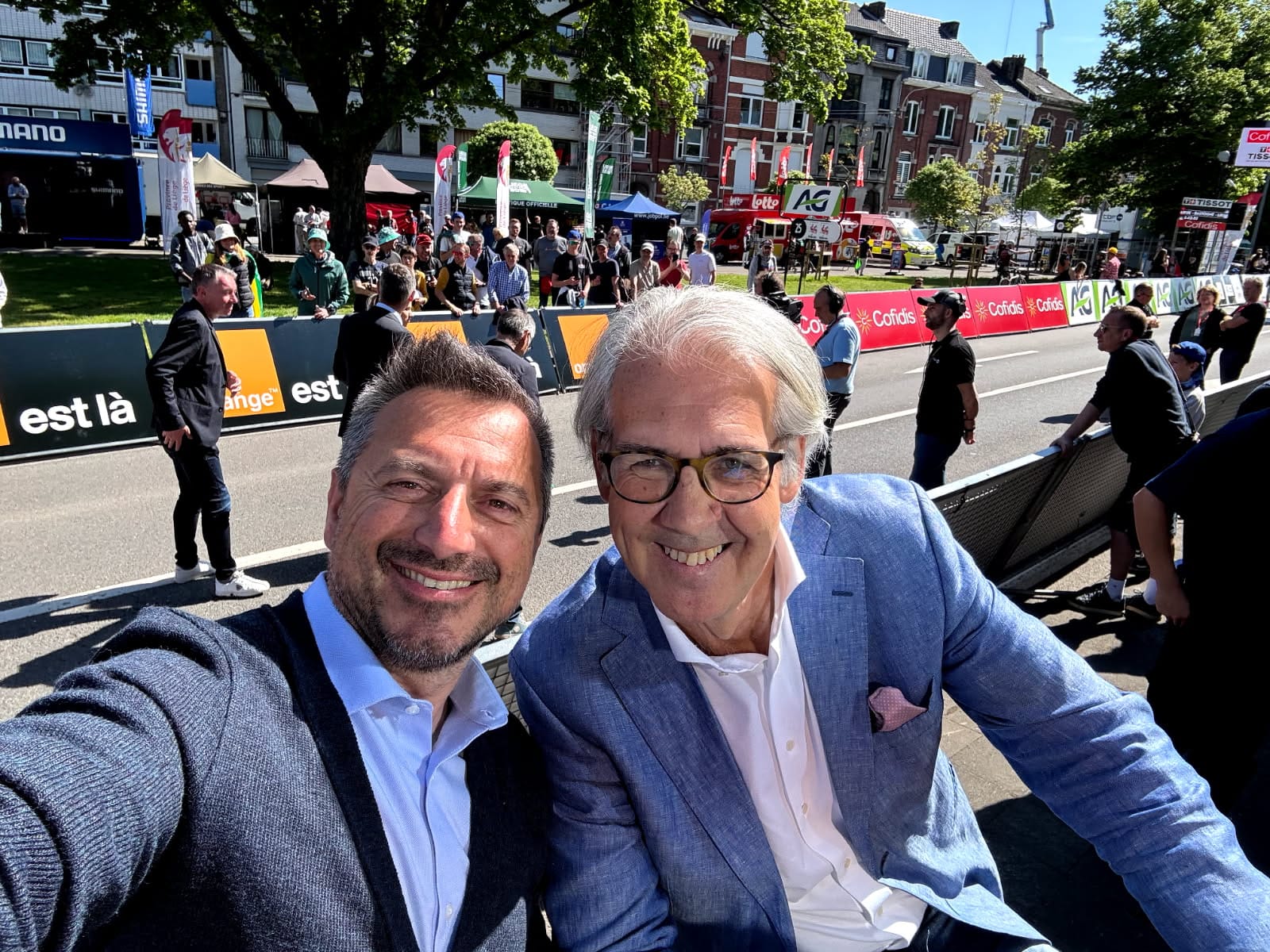
Since 2013, Cyril and Rodrigo have been a close-knit duo. One writes the editorial content; the other observes, analyzes, and explains it in layman’s terms. “My role isn’t to describe what we see on screen. It’s to explain why things are happening. Why is a certain team picking up the pace 60 km from the finish? Why is a breakaway forming? Why is a leader catching up?” He compares this role to that of an advisor at Decathlon: “We listen, we understand the need, and we provide the right solution. It’s the same here: I look at the screen, I listen to Rodrigo, and I share what I see, what I sense, and what I know.” |
Contrary to what one might think, the consultant doesn’t spend hours poring over the details. “I prepare for the Tour just like a rider. I read the roadbook. I know which stages are for sprinters, breakaway specialists, and climbers. And then, it’s the live action that dictates when I step in. My experience helps me sense the key moments.”
And when it comes to analyzing a crash, a heated sprint, or a questionable tactic, he doesn’t hold back. “Sometimes I don’t understand a strategy, and I say so. Then we debate it. We capture people’s attention through analysis, emotion, and experience.”
Because emotion is still the key. “When a rider attempts a feat, when he’s alone in the lead and about to crack with 2 km to go, we have to convey what he’s going through. Even if he’s Belgian and I’m French. On the Tour, I can get excited about a French rider. But above all, I get excited about the effort, the feat, regardless of nationality.”
Cyril cites Romain Bardet’s or Julian Alaphilippe’s victories as recent examples of pure emotion. But he also knows how to keep things in perspective when it comes to certain excesses: “Flashing your butt at the camera is pointless. It’s a downside of social media. Cycling deserves better than that.”
What about doping? He doesn’t shy away from the topic: “Yes, cycling has had its share of scandals. But we mustn’t forget that every sport has had them. It’s just that, in people’s minds, the Tour is so grueling that it’s impossible to complete it without cheating. We should address these issues when there’s a genuine need to do so, but we must do so thoughtfully. It’s not our place to condemn without proof.”
Even today, the Tour continues to play a significant role in Cyril Saugrain’s life. “When I commentate on a race, I represent something. In Belgium, all the young Walloon riders know me—not for my racing achievements, but for my voice. The Tour has given me a certain aura that never fades. Twenty years later, it continues to change my life.”